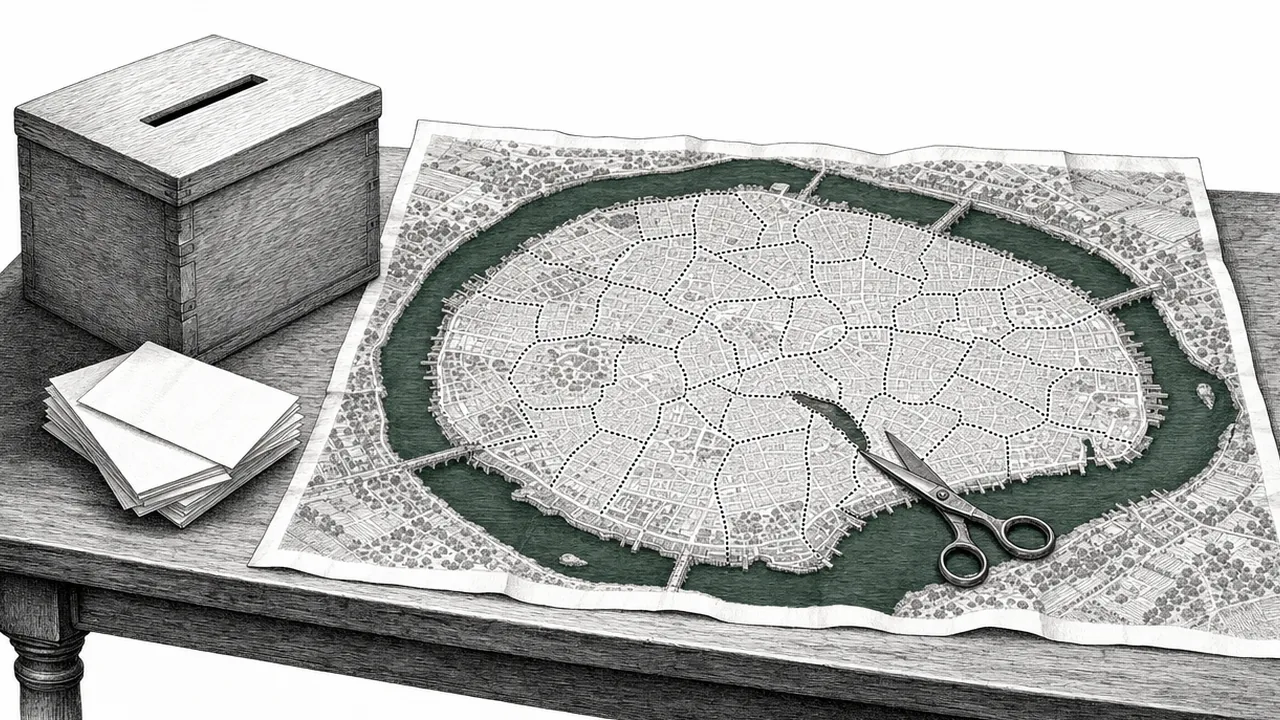
The 2004 Quebec municipal referendums were votes held on June 20, 2004, in 89 former municipalities of Quebec to decide whether each should leave the larger city it had been merged into during the municipal reorganization of 2000–2003 and be reconstituted.[1][2] The Quebec Liberal Party government of Jean Charest organized the consultation after the 2003 provincial election, in which the Liberals had campaigned on letting merged suburbs demerge. The mergers had been imposed by the preceding Parti Québécois government.[3][4]
The process was set out in Bill 9, An Act respecting the consultation of citizens with respect to the territorial reorganization of certain municipalities. A referendum was held in a former municipality only if at least 10% of its qualified voters first signed a register. A demerger passed only if the Yes side won a majority of votes cast and its votes equalled at least 35% of the voters on the referendum list.[5] The Yes side met both conditions in 31 sectors, including 15 on the Island of Montreal and four in Longueuil.[2][6] In many other sectors the Yes side won a majority but fell short of the 35% threshold.[2][1]
The reconstituted municipalities came back into existence on January 1, 2006.[7] Under Bill 75 (2004), they remained tied to the cities they had left through urban agglomeration councils, which control shared services such as police, fire protection and public transit. Voting weight on these councils follows population.[6] Mayors of Montreal's reconstituted suburbs have since argued that this structure gives them too little say.[8][9]
Background
In December 2000 the National Assembly of Quebec passed Bill 170, An Act to reform the municipal territorial organization of the metropolitan regions of Montréal, Québec and the Outaouais. It was assented to on December 20, 2000. The act created the new cities of Montreal, Quebec City, Hull-Gatineau (later Gatineau), Longueuil and Lévis and divided four of them into boroughs. The municipalities they replaced ceased to exist on January 1, 2002.[10] In 2002 nearly 100 suburbs across Quebec lost their local governments and became part of larger cities under the Parti Québécois government's merger legislation, which was presented as a cost-saving measure.[3]
Westmount mayor Peter Trent was one of the mergers' foremost opponents.[11] The CBC reported that the issue "cost the PQ crucial votes" in the April 2003 election. During that campaign the Liberals promised to let merged municipalities demerge.[1][3] After the Liberal victory, municipal affairs minister Jean-Marc Fournier introduced Bill 9 to carry out the promise.[4]
Consultation process
Bill 9
Bill 9 (2003, chapter 14) was introduced on June 17, 2003, passed on December 17, 2003, and assented to on December 18, 2003. It let citizens of the affected municipalities choose between keeping the current municipality and reconstituting their former one. Where a sector had been detached from a municipality that still existed, they could instead choose to return that sector to it.[5] The act defined each "sector concerned" in one of three ways:
- the territory of an entire former municipality within the new city;
- a former municipality's territory now split between the city and another existing municipality;
- territory moved into the city from another municipality that still existed.[5]
In the third case the question asked about returning the territory. For example, voters in the part of Stoke attached to Sherbrooke were to be asked about its return to the Municipality of Stoke.[12]
Before any referendum, the minister of municipal affairs had to commission and publish an impact study on the costs and consequences of the proposed reorganization. The minister could set up a transition committee for any city with at least one sector where the answer was deemed affirmative.[5]
Registers
The consultation began with a registration process in every sector concerned. Under section 21 of the act, a referendum poll had to be held in a sector if requests to hold one reached 10% of the qualified voters on that sector's referendum list. The small former municipalities of L'Île-Dorval and Lac-Tremblant-Nord were exempt from the 10% rule. There the ordinary request thresholds of Quebec's municipal referendum law applied instead.[5]
A government order of April 21, 2004 (Order 386-2004) opened the registers on May 16, 2004, set the referendum date of June 20, 2004, and prescribed the wording of the questions. In the usual form, voters were asked whether they were "in favour of the dismemberment" of the merged city "and the constitution, for the sector" of the former municipality, "of a municipal entity" under the act.[12] In Montreal, registers were held from May 16 to 20, 2004, in each of the 28 former municipalities.[4]
35% rule
Section 43 of the act deemed the answer affirmative only where the Yes votes outnumbered the No votes and equalled at least 35% of the qualified voters on the sector's referendum list.[5] The 35% was measured against registered voters, not against the number of people who voted.[1]
Results
Referendums were held in 89 sectors.[2][1] Advance polls on June 13 and 14 drew 103,991 voters, or 10.61% of the 979,744 people on the referendum lists.[1] According to the final results published by the Directeur général des élections du Québec, both conditions were met in 31 sectors:[2]
- Montreal (15): Baie-D'Urfé, Beaconsfield, Côte Saint-Luc, Dollard-des-Ormeaux, Dorval, Hampstead, Kirkland, L'Île-Dorval, Montréal-Est, Montreal West, Mount Royal, Pointe-Claire, Sainte-Anne-de-Bellevue, Senneville and Westmount
- Quebec City (2): L'Ancienne-Lorette and Saint-Augustin-de-Desmaures
- Longueuil (4): Boucherville, Brossard, Saint-Bruno-de-Montarville and Saint-Lambert
- La Tuque (2): La Bostonnais and Lac-Édouard
- Les Îles-de-la-Madeleine (2): Cap-aux-Meules and Grosse-Île
- one sector each in Mont-Laurier (Saint-Aimé-du-Lac-des-Îles), Mont-Tremblant (Lac-Tremblant-Nord), Rivière-Rouge (La Macaza), Sainte-Agathe-des-Monts (Ivry-sur-le-Lac), Cookshire-Eaton (Newport) and Sainte-Marguerite–Estérel (Estérel)[2][6]
The highest shares of Yes votes among registered voters were in L'Île-Dorval (74.00%), Senneville (73.63%) and Baie-D'Urfé (72.80%). The lowest shares among the successful sectors were in Newport (35.78%) and Dollard-des-Ormeaux (37.58%).[2] On the Island of Montreal, 22 of the 28 former municipalities held referendums and 15 voted to be reconstituted.[4]
Masson-Angers recount
On election night, Masson-Angers in Gatineau was reported as demerging, with Yes votes at 35.0% of registered voters.[1] Its answer was initially deemed affirmative, and on June 21, 2004, the government set up a transition committee for Gatineau, where Masson-Angers was the only sector with an affirmative result. After a recount on June 28, 2004, the answer was deemed negative and the committee was dissolved by order on September 1, 2004.[13] In the final official results, Masson-Angers had 2,563 Yes votes and 1,285 No votes. The Yes votes equalled 34.80% of its 7,364 registered voters.[2]
Majorities below the threshold
In 27 sectors, Masson-Angers among them, the Yes side won more votes than the No side but fell short of 35% of registered voters, so the merged city was maintained.[2] After Masson-Angers, the closest were L'Île-Bizard (33.68%), Sillery (33.56%) and Roxboro (33.36%). Large former cities in this group included Sainte-Foy (16,233 Yes to 14,869 No; 27.35% of registered voters), Saint-Laurent (15,939 to 5,225; 28.58%), Anjou (7,808 to 5,883; 26.47%), Aylmer (7,412 to 5,357; 26.48%), LaSalle (11,032 to 7,111; 20.55%) and Pierrefonds (9,992 to 4,254; 24.87%).[2] The CBC noted that the conditions were ones "many municipalities in regions outside of Montreal failed to accomplish".[1]
Detailed results
The table below shows the outcome in each former municipality. "Register" is the share of qualified voters who signed the register. "For" and "Against" are shares of valid votes. The last column gives Yes votes as a percentage of registered voters, the figure that had to reach 35%.[2]
| New municipality | Old municipality | Register | For | Against | Yes as % of registered voters |
|---|---|---|---|---|---|
| Adstock | Village of Sainte-Anne-du-Lac | 3.86% | No referendum | No referendum | No referendum |
| Adstock | Municipality of Adstock | 0.45% | No referendum | No referendum | No referendum |
| Alma | City of Alma | Nobody | No referendum | No referendum | No referendum |
| Alma | Municipality of Delisle | 0.12% | No referendum | No referendum | No referendum |
| Beauharnois | City of Maple Grove | 23.94% | 48.65% | 51.35% | 31.43% |
| Beauharnois | Village of Melocheville | 10.50% | 47.04% | 52.96% | 26.01% |
| Beauharnois | City of Beauharnois | 0.20% | No referendum | No referendum | No referendum |
| Cookshire-Eaton | Township of Newport, Quebec | 21.58% | 72.03% | 27.97% | 35.78% |
| Cookshire-Eaton | City of Cookshire | 5.81% | No referendum | No referendum | No referendum |
| Cookshire-Eaton | Municipality of Eaton | 2.57% | No referendum | No referendum | No referendum |
| Gatineau | City of Aylmer | 17.22% | 58.05% | 41.95% | 26.48% |
| Gatineau | City of Buckingham | 13.87% | 41.77% | 58.23% | 20.27% |
| Gatineau | City of Hull | 10.09% | 39.64% | 60.36% | 15.71% |
| Gatineau | City of Masson-Angers | 20.14% | 66.61% | 33.39% | 34.80% |
| Gatineau | City of Gatineau | 5.40% | No referendum | No referendum | No referendum |
| Grenville-sur-la-Rouge | Village of Calumet | 6.98% | No referendum | No referendum | No referendum |
| Grenville-sur-la-Rouge | Township of Grenville | 1.57% | No referendum | No referendum | No referendum |
| La Tuque | Municipality of La Croche | 10.42% | 35.71% | 64.29% | 11.01% |
| La Tuque | Municipality of La Bostonnais | 21.11% | 74.31% | 25.69% | 40.91% |
| La Tuque | Municipality of Lac-Édouard | 17.16% | 92.89% | 7.11% | 43.08% |
| La Tuque | Village of Parent | 14.39% | 42.86% | 57.14% | 25.44% |
| La Tuque | Municipality of La Tuque | 0.15% | No referendum | No referendum | No referendum |
| Lac-Etchemin | City of Lac-Etchemin | Nobody | No referendum | No referendum | No referendum |
| Lac-Etchemin | Parish of Sainte-Germaine-du-Lac-Etchemin | 1.26% | No referendum | No referendum | No referendum |
| Lacolle | Parish of Notre-Dame-du-Mont-Carmel | 14.50% | 38.44% | 61.56% | 26.97% |
| Lacolle | Village of Lacolle | 0.42% | No referendum | No referendum | No referendum |
| Les Îles-de-la-Madeleine | Municipality of Grosse-Île | 35.02% | 81.70% | 18.30% | 60.09% |
| Les Îles-de-la-Madeleine | Village of Cap-aux-Meules | 16.64% | 62.77% | 37.23% | 39.81% |
| Les Îles-de-la-Madeleine | Municipality of Fatima | 4.11% | No referendum | No referendum | No referendum |
| Les Îles-de-la-Madeleine | Municipality of L'Île-du-Havre-Aubert | 3.28% | No referendum | No referendum | No referendum |
| Les Îles-de-la-Madeleine | Municipality of Havre-aux-Maisons | 1.23% | No referendum | No referendum | No referendum |
| Les Îles-de-la-Madeleine | Municipality of Grande-Entrée | 0.74% | No referendum | No referendum | No referendum |
| Les Îles-de-la-Madeleine | Municipality of L'Étang-du-Nord | 0.61% | No referendum | No referendum | No referendum |
| Lévis | City of Charny | 10.71% | 47.77% | 52.23% | 18.29% |
| Lévis | City of Saint-Nicolas | 16.64% | 54.27% | 45.73% | 27.04% |
| Lévis | City of Saint-Rédempteur | 14.52% | 37.62% | 62.38% | 19.68% |
| Lévis | Municipality of Saint-Étienne-de-Lauzon | 23.38% | 55.99% | 44.01% | 28.00% |
| Lévis | City of Saint-Romuald | 8.13% | No referendum | No referendum | No referendum |
| Lévis | City of Saint-Jean-Chrysostome | 7.45% | No referendum | No referendum | No referendum |
| Lévis | Parish of Sainte-Hélène-de-Breakeyville | 7.28% | No referendum | No referendum | No referendum |
| Lévis | Municipality of Pintendre | 4.48% | No referendum | No referendum | No referendum |
| Lévis | Parish of Saint-Joseph-de-la-Pointe-de-Lévy | 4.14% | No referendum | No referendum | No referendum |
| Lévis | City of Lévis | 3.71% | No referendum | No referendum | No referendum |
| Longueuil | City of Greenfield Park | 16.71% | 65.51% | 34.49% | 27.34% |
| Longueuil | City of Boucherville | 34.73% | 75.66% | 24.34% | 47.95% |
| Longueuil | City of Brossard | 23.48% | 80.94% | 19.06% | 38.70% |
| Longueuil | City of Saint-Bruno-de-Montarville | 36.20% | 72.04% | 27.96% | 47.61% |
| Longueuil | City of Saint-Lambert | 31.16% | 69.71% | 30.29% | 41.40% |
| Longueuil | City of LeMoyne | 2.23% | No referendum | No referendum | No referendum |
| Longueuil | City of Saint-Hubert | 1.84% | No referendum | No referendum | No referendum |
| Longueuil | City of Longueuil | 0.43% | No referendum | No referendum | No referendum |
| Magog | Township of Magog | 17.99% | 59.83% | 40.17% | 25.57% |
| Magog | Village of Omerville | 0.96% | No referendum | No referendum | No referendum |
| Magog | City of Magog, Quebec | 0.31% | No referendum | No referendum | No referendum |
| Matane | Municipality of Petit-Matane | 16.62% | 24.52% | 75.48% | 10.96% |
| Matane | Municipality of Saint-Luc-de-Matane | 13.49% | 29.24% | 70.76% | 16.62% |
| Matane | Parish of Saint-Jérôme-de-Matane | 5.13% | No referendum | No referendum | No referendum |
| Matane | City of Matane | 0.15% | No referendum | No referendum | No referendum |
| Métis-sur-Mer | Métis-sur-Mer | 11.40% | 44.07% | 55.93% | 22.67% |
| Métis-sur-Mer | Les Boules | 4.46% | No referendum | No referendum | No referendum |
| Mont-Joli | Municipality of Saint-Jean-Baptiste | 12.79% | 47.23% | 52.77% | 22.86% |
| Mont-Joli | City of Mont-Joli | 0.04% | No referendum | No referendum | No referendum |
| Mont-Laurier | Municipality of Saint-Aimé-du-Lac-des-Îles | 34.62% | 79.59% | 20.41% | 52.38% |
| Mont-Laurier | Municipality of Des Ruisseaux | 2.14% | No referendum | No referendum | No referendum |
| Mont-Laurier | City of Mont-Laurier | 0.03% | No referendum | No referendum | No referendum |
| Montreal | City (Cité) of Côte Saint-Luc | 25.81% | 87.04% | 12.96% | 40.43% |
| Montreal | City (Cité) of Dorval | 31.19% | 76.80% | 23.20% | 41.41% |
| Montreal | City of Anjou | 16.88% | 57.03% | 42.97% | 26.47% |
| Montreal | City of LaSalle | 11.21% | 60.81% | 39.19% | 20.55% |
| Montreal | City of L'Île-Bizard | 21.21% | 63.53% | 36.47% | 33.68% |
| Montreal | City of Pierrefonds | 15.87% | 70.14% | 29.86% | 24.87% |
| Montreal | City of Roxboro | 25.08% | 67.16% | 32.84% | 33.36% |
| Montreal | City of Sainte-Geneviève | 14.21% | 65.65% | 34.35% | 21.49% |
| Montreal | City of Saint-Laurent | 18.53% | 75.31% | 24.69% | 28.58% |
| Montreal | City of Baie-d'Urfé | 57.37% | 92.94% | 7.06% | 72.80% |
| Montreal | City of Beaconsfield | 37.72% | 80.44% | 19.56% | 45.88% |
| Montreal | City of Dollard-des-Ormeaux | 24.11% | 85.23% | 14.77% | 37.58% |
| Montreal | City of Hampstead | 24.71% | 90.41% | 9.59% | 47.21% |
| Montreal | City of Kirkland | 28.49% | 87.63% | 12.37% | 47.32% |
| Montreal | City of L'Île-Dorval | 79.17% | 75.51% | 24.49% | 74.00% |
| Montreal | City of Montreal West | 36.71% | 82.62% | 17.38% | 47.52% |
| Montreal | City of Montreal-Est | 36.02% | 84.51% | 15.49% | 45.16% |
| Montreal | City of Mount Royal | 24.36% | 81.82% | 18.18% | 41.69% |
| Montreal | City of Pointe-Claire | 36.55% | 90.02% | 9.98% | 52.81% |
| Montreal | City of Sainte-Anne-de-Bellevue | 26.83% | 82.26% | 17.74% | 47.68% |
| Montreal | City of Westmount | 38.49% | 92.13% | 7.87% | 52.71% |
| Montreal | Village of Senneville | 61.80% | 93.42% | 6.58% | 73.63% |
| Montreal | City of Lachine | 6.78% | No referendum | No referendum | No referendum |
| Montreal | City of Saint-Léonard | 3.23% | No referendum | No referendum | No referendum |
| Montreal | City of Outremont | 2.60% | No referendum | No referendum | No referendum |
| Montreal | City of Verdun | 2.24% | No referendum | No referendum | No referendum |
| Montreal | City of Montreal-Nord | 1.62% | No referendum | No referendum | No referendum |
| Montreal | City of Montreal | 0.18% | No referendum | No referendum | No referendum |
| Mont-Tremblant | Municipality of Mont-Tremblant | 21.38% | 71.10% | 28.90% | 31.34% |
| Mont-Tremblant | Municipality of Lac-Tremblant-Nord | 42.77% | 84.47% | 15.53% | 50.29% |
| Mont-Tremblant | Parish of Saint-Jovite | 0.58% | No referendum | No referendum | No referendum |
| Mont-Tremblant | City of Saint-Jovite | 0.26% | No referendum | No referendum | No referendum |
| Port-Cartier | Municipality of Rivière-Pentecôte | 1.35% | No referendum | No referendum | No referendum |
| Port-Cartier | City of Port-Cartier | 0.13% | No referendum | No referendum | No referendum |
| Quebec City | City of Beauport | 12.85% | 46.16% | 53.84% | 19.42% |
| Quebec City | City of Cap-Rouge | 17.28% | 39.00% | 61.00% | 22.48% |
| Quebec City | City of Charlesbourg | 13.44% | 43.42% | 56.58% | 18.40% |
| Quebec City | City of Lac-Saint-Charles | 21.47% | 66.44% | 33.56% | 29.86% |
| Quebec City | City of Loretteville | 11.19% | 33.62% | 66.38% | 14.35% |
| Quebec City | City of Sainte-Foy | 20.20% | 52.19% | 47.81% | 27.35% |
| Quebec City | City of Saint-Émile | 15.01% | 49.99% | 50.01% | 21.16% |
| Quebec City | City of Sillery | 24.35% | 51.48% | 48.52% | 33.56% |
| Quebec City | City of Val-Bélair | 13.31% | 49.76% | 50.24% | 18.68% |
| Quebec City | City of Vanier | 17.34% | 61.37% | 38.63% | 23.19% |
| Quebec City | City of L'Ancienne-Lorette | 29.64% | 67.07% | 32.93% | 40.94% |
| Quebec City | Municipality of Saint-Augustin-de-Desmaures | 24.40% | 62.48% | 37.52% | 38.40% |
| Quebec City | City of Quebec | 2.65% | No referendum | No referendum | No referendum |
| Rimouski | Municipality of Mont-Lebel | Nobody | No referendum | No referendum | No referendum |
| Rimouski | Parish of Sainte-Odile-sur-Rimouski | 2.50% | No referendum | No referendum | No referendum |
| Rimouski | City of Pointe-au-Père | 1.09% | No referendum | No referendum | No referendum |
| Rimouski | Parish of Sainte-Blandine | 0.54% | No referendum | No referendum | No referendum |
| Rimouski | Village of Rimouski-Est | 0.47% | No referendum | No referendum | No referendum |
| Rimouski | City of Rimouski | 0.06% | No referendum | No referendum | No referendum |
| Rivière-Rouge | Municipality of La Macaza | 31.34% | 77.50% | 22.50% | 42.19% |
| Rivière-Rouge | Village of Sainte-Véronique | 15.38% | 44.35% | 55.65% | 21.50% |
| Rivière-Rouge | Village of L'Annonciation | 0.44% | No referendum | No referendum | No referendum |
| Rivière-Rouge | Municipality of Marchand | 0.32% | No referendum | No referendum | No referendum |
| Rouyn-Noranda | Municipality of Mont-Brun | 24.14% | 28.92% | 71.08% | 20.35% |
| Rouyn-Noranda | Municipality of Destor | Nobody | No referendum | No referendum | No referendum |
| Rouyn-Noranda | City of Cadillac | 7.04% | No referendum | No referendum | No referendum |
| Rouyn-Noranda | Municipality of D’Alembert | 6.94% | No referendum | No referendum | No referendum |
| Rouyn-Noranda | Municipality of Cloutier | 5.63% | No referendum | No referendum | No referendum |
| Rouyn-Noranda | Municipality of Rollet | 4.50% | No referendum | No referendum | No referendum |
| Rouyn-Noranda | Municipality of McWatters | 4.46% | No referendum | No referendum | No referendum |
| Rouyn-Noranda | Municipality of Évain | 4.09% | No referendum | No referendum | No referendum |
| Rouyn-Noranda | Municipality of Arntfield | 1.66% | No referendum | No referendum | No referendum |
| Rouyn-Noranda | Municipality of Cléricy | 1.28% | No referendum | No referendum | No referendum |
| Rouyn-Noranda | Municipality of Bellecombe | 1.13% | No referendum | No referendum | No referendum |
| Rouyn-Noranda | Municipality of Montbeillard | 1.02% | No referendum | No referendum | No referendum |
| Rouyn-Noranda | City of Rouyn-Noranda | 0.06% | No referendum | No referendum | No referendum |
| Saguenay | City of La Baie | 9.67% | No referendum | No referendum | No referendum |
| Saguenay | City of Laterrière | 6.66% | No referendum | No referendum | No referendum |
| Saguenay | City of Chicoutimi | 5.53% | No referendum | No referendum | No referendum |
| Saguenay | City of Jonquière | 1.67% | No referendum | No referendum | No referendum |
| Saguenay | Municipality of Lac-Kénogami | 1.60% | No referendum | No referendum | No referendum |
| Saguenay | Municipality of Shipshaw | 0.92% | No referendum | No referendum | No referendum |
| Saguenay | Township of Tremblay | 0.66% | No referendum | No referendum | No referendum |
| Sainte-Agathe-des-Monts | Municipality of Sainte-Agathe-Nord | 16.26% | 51.19% | 48.81% | 19.03% |
| Sainte-Agathe-des-Monts | Municipality of Ivry-sur-le-Lac | 24.79% | 67.98% | 32.02% | 40.47% |
| Sainte-Agathe-des-Monts | City of Sainte-Agathe-des-Monts | 0.11% | No referendum | No referendum | No referendum |
| Sainte-Marguerite-Estérel | City of Estérel | 35.44% | 83.73% | 16.27% | 52.11% |
| Sainte-Marguerite-Estérel | Parish of Sainte-Marguerite-du-Lac-Masson | 0.10% | No referendum | No referendum | No referendum |
| Saint-Georges | Municipality of Aubert-Gaillon | 15.78% | 34.63% | 65.37% | 22.63% |
| Saint-Georges | Parish of Saint-Georges-Est | 9.16% | No referendum | No referendum | No referendum |
| Saint-Georges | Parish of Saint-Jean-de-la-Lande | 3.83% | No referendum | No referendum | No referendum |
| Saint-Georges | City of Saint-Georges | 0.16% | No referendum | No referendum | No referendum |
| Saint-Hyacinthe | Parish of Sainte-Rosalie | 13.51% | 49.85% | 50.15% | 27.51% |
| Saint-Hyacinthe | Parish of Saint-Hyacinthe-le-Confesseur | 6.37% | No referendum | No referendum | No referendum |
| Saint-Hyacinthe | Parish of Saint-Thomas-d'Aquin | 3.44% | No referendum | No referendum | No referendum |
| Saint-Hyacinthe | Parish of Notre-Dame-de-Saint-Hyacinthe | 2.93% | No referendum | No referendum | No referendum |
| Saint-Hyacinthe | City of Sainte-Rosalie | 1.06% | No referendum | No referendum | No referendum |
| Saint-Hyacinthe | City of Saint-Hyacinthe | 0.11% | No referendum | No referendum | No referendum |
| Saint-Jean-sur-Richelieu | Parish of Saint-Athanase | 13.46% | 44.75% | 55.25% | 22.02% |
| Saint-Jean-sur-Richelieu | Municipality of L'Acadie | 5.14% | No referendum | No referendum | No referendum |
| Saint-Jean-sur-Richelieu | City of Iberville | 3.36% | No referendum | No referendum | No referendum |
| Saint-Jean-sur-Richelieu | City of Saint-Luc | 1.17% | No referendum | No referendum | No referendum |
| Saint-Jean-sur-Richelieu | City of Saint-Jean-sur-Richelieu | 0.37% | No referendum | No referendum | No referendum |
| Saint-Jérôme | City of Bellefeuille | 0.71% | No referendum | No referendum | No referendum |
| Saint-Jérôme | City of Saint-Antoine | 0.28% | No referendum | No referendum | No referendum |
| Saint-Jérôme | City of Lafontaine | 0.13% | No referendum | No referendum | No referendum |
| Saint-Jérôme | City of Saint-Jérôme | 0.05% | No referendum | No referendum | No referendum |
| Saint-Pie | Parish of Saint-Pie | 3.48% | No referendum | No referendum | No referendum |
| Saint-Pie | City of Saint-Pie | 0.16% | No referendum | No referendum | No referendum |
| Saint-Sauveur | Parish of Saint-Sauveur | 0.27% | No referendum | No referendum | No referendum |
| Saint-Sauveur | Village of Saint-Sauveur-des-Monts | 0.06% | No referendum | No referendum | No referendum |
| Salaberry-de-Valleyfield | City of Saint-Timothée | 19.51% | 59.47% | 40.53% | 30.02% |
| Salaberry-de-Valleyfield | Municipality of Grande-Île | 18.60% | 59.72% | 40.28% | 30.40% |
| Salaberry-de-Valleyfield | City of Salaberry-de-Valleyfield | 0.20% | No referendum | No referendum | No referendum |
| Sept-Îles | Municipality of Gallix | 11.79% | 22.91% | 77.09% | 10.50% |
| Sept-Îles | City of Moisie | 3.12% | No referendum | No referendum | No referendum |
| Sept-Îles | City of Sept-Îles | 1.68% | No referendum | No referendum | No referendum |
| Shawinigan | City of Grand-Mère | 17.93% | 51.14% | 48.86% | 25.42% |
| Shawinigan | Municipality of Lac-à-la-Tortue | 11.52% | 56.77% | 43.23% | 31.47% |
| Shawinigan | Parish of Saint-Gérard-des-Laurentides | 19.27% | 50.57% | 49.43% | 27.71% |
| Shawinigan | Parish of Saint-Jean-des-Piles | 12.03% | 31.32% | 68.68% | 18.32% |
| Shawinigan | Village of Saint-Georges | 13.79% | 50.87% | 49.13% | 26.47% |
| Shawinigan | City of Shawinigan-Sud | 7.94% | No referendum | No referendum | No referendum |
| Shawinigan | City of Shawinigan | 0.29% | No referendum | No referendum | No referendum |
| Sherbrooke | City of Bromptonville | 12.76% | 38.65% | 61.35% | 20.01% |
| Sherbrooke | City of Lennoxville | 14.97% | 52.49% | 47.51% | 18.56% |
| Sherbrooke | Municipality of Deauville | 17.69% | 55.11% | 44.89% | 26.11% |
| Sherbrooke | Municipality of Saint-Élie-d'Orford | 21.84% | 47.81% | 52.19% | 23.33% |
| Sherbrooke | City of Rock Forest | 4.59% | No referendum | No referendum | No referendum |
| Sherbrooke | Municipality of Stoke | 2.86% | No referendum | No referendum | No referendum |
| Sherbrooke | City of Fleurimont | 1.17% | No referendum | No referendum | No referendum |
| Sherbrooke | Municipality of Ascot | 1.13% | No referendum | No referendum | No referendum |
| Sherbrooke | City of Sherbrooke | 0.21% | No referendum | No referendum | No referendum |
| Sutton | Township of Sutton | 12.64% | 49.25% | 50.75% | 20.64% |
| Sutton | City of Sutton | 0.35% | No referendum | No referendum | No referendum |
| Terrebonne | City of Lachenaie | 0.77% | No referendum | No referendum | No referendum |
| Terrebonne | City of La Plaine | 0.61% | No referendum | No referendum | No referendum |
| Terrebonne | City of Terrebonne | 0.09% | No referendum | No referendum | No referendum |
| Thetford Mines | City of Black Lake | 17.41% | 37.86% | 62.14% | 26.24% |
| Thetford Mines | Village of Robertsonville | 18.39% | 43.62% | 56.38% | 32.82% |
| Thetford Mines | Municipality of Pontbriand | 8.74% | No referendum | No referendum | No referendum |
| Thetford Mines | Township of Thetford-Partie-Sud | 0.97% | No referendum | No referendum | No referendum |
| Thetford Mines | City of Thetford Mines | 0.48% | No referendum | No referendum | No referendum |
| Trois-Rivières | City of Cap-de-la-Madeleine | 6.56% | No referendum | No referendum | No referendum |
| Trois-Rivières | City of Saint-Louis-de-France | 4.55% | No referendum | No referendum | No referendum |
| Trois-Rivières | City of Sainte-Marthe-du-Cap | 4.52% | No referendum | No referendum | No referendum |
| Trois-Rivières | Municipality of Pointe-du-Lac | 4.35% | No referendum | No referendum | No referendum |
| Trois-Rivières | City of Trois-Rivières-Ouest | 1.32% | No referendum | No referendum | No referendum |
| Trois-Rivières | City of Trois-Rivières | 0.30% | No referendum | No referendum | No referendum |
| Val-d'Or | Municipality of Dubuisson | 7.39% | No referendum | No referendum | No referendum |
| Val-d'Or | Municipality of Val-Senneville | 3.46% | No referendum | No referendum | No referendum |
| Val-d'Or | Municipality of Sullivan | 1.23% | No referendum | No referendum | No referendum |
| Val-d'Or | Municipality of Vassan | 0.39% | No referendum | No referendum | No referendum |
| Val-d'Or | City of Val-d'Or | 0.04% | No referendum | No referendum | No referendum |
Figures as published by the Directeur général des élections du Québec.[2]
Notes
- In 2005, Cap-aux-Meules held a second referendum in which voters chose to remain in the amalgamated Les-Îles-de-la-Madeleine municipality after all.[14]
- Only a very small part of the population of Stoke had merged with Sherbrooke
Aftermath
Bill 75 and urban agglomerations
Bill 75, An Act respecting the exercise of certain municipal powers in certain urban agglomerations (2004, chapter 29), was introduced on November 11, 2004, and assented to on December 17, 2004. It gave legal effect to the June 2004 results by allowing each former municipality with an affirmative answer to be reconstituted.[6] It created 11 urban agglomerations, each made up of the reconstituted municipalities and the reduced territory of the city they had left, which became the "central municipality". The agglomerations were Montreal, Quebec, Longueuil, Mont-Laurier, La Tuque, Îles-de-la-Madeleine, Sainte-Agathe-des-Monts, Mont-Tremblant, Cookshire-Eaton, Rivière-Rouge and Sainte-Marguerite–Estérel.[6]
Powers over matters such as passenger transportation, the arterial road network, police, civil protection, fire protection, water supply and purification, residual materials and economic development became "urban agglomeration powers". The central municipality exercises them across the whole agglomeration through an urban agglomeration council. Every related municipality is represented on the council, and each municipality's voting weight corresponds to its share of the population.[6]
Reconstitution
Reconstitution orders made in 2005 took effect on January 1, 2006. That day 30 municipalities were constituted: the 15 on the Island of Montreal, two from Quebec City, four from Longueuil, two from La Tuque, Grosse-Île, Saint-Aimé-du-Lac-des-Îles, Lac-Tremblant-Nord, La Macaza, Ivry-sur-le-Lac, Newport and Estérel. On the same date the remaining Ville de Sainte-Marguerite–Estérel was renamed Sainte-Marguerite-du-Lac-Masson.[7]
Cap-aux-Meules, which had voted 62.8% Yes in June 2004, was not among them. Opponents of demerger organized a second referendum there in 2005, in which a majority chose to remain in the merged Municipality of Les Îles-de-la-Madeleine. Grosse-Île was reconstituted in 2006.[14][7]
Reaction and assessment
On referendum night, Peter Trent told supporters in Westmount: "In spite of the fact that the PQ merged us against our will, we got our city back!" Montreal mayor Gérald Tremblay noted that "a total of 87 per cent – close to 1.6 million citizens – have decided to choose Montreal".[1]
The Montreal agglomeration council soon became a point of conflict. In late 2006 the mayors of the reconstituted municipalities boycotted its meetings, saying it was dominated by Montreal and that they held only about 17% of the votes. Liberal MNA Russell Copeman called the council "at least currently, dysfunctional". Municipal affairs minister Nathalie Normandeau agreed to review how it worked but said Quebec would not reopen the demerger legislation.[8] In January 2007, on the first anniversary of the demergers, suburban mayors said that their municipalities paid about 21% of the agglomeration budget but held about 17% of the votes. Beaconsfield mayor Bob Benedetti said Charest had promised to give them their cities back and had "only half-delivered". Baie-D'Urfé mayor Maria Tutino described the return of local government as "an absolute success" at the local level.[3]
In 2014 Côte Saint-Luc, Hampstead and Montreal West marked ten years since the vote. Côte Saint-Luc mayor Anthony Housefather recalled that "you had one chance to demerge and you needed to get 35 per cent of the voters list to vote yes".[15] In January 2018 the mayors of all 15 reconstituted municipalities on the island voted against the agglomeration budget. With about 13% of the council's votes, they asked the province to review the council's structure.[9]
Sources
Each source is listed with the passage or place in it that supports the text.
- CBC News. Demerger vote will change map of Quebec. 2004-06-21.
This 35% is calculated on the basis of the number of qualified voters registered on the referendum list and does not represent, for example, a percentage of the number of persons who voted.
- Directeur général des élections du Québec. Referendums of June 20, 2004. 2016-03-04. Archived copy. Results table, row Masson-Angers (QV registered, YES, NO, rejected, total, turnout %, % of QV registered in favour of YES).
Masson-Angers 7 364 2 563 1 285 52 3900 52,99 34,80
- CBC News. Demergers disappoint Montreal suburbs. 2007-01-02.
In 2002, nearly 100 suburbs across Quebec were forced to give up their local governments and services and become part of mega-cities, under a merger law introduced by the former Parti Québécois government.
- Archives de Montréal, Ville de Montréal. Referendum. 2025-12-06. Archived copy.
The residents of 22 former cities chose to hold a referendum. Following the referendums held on June 20, 2004, 15 former municipalities were reconstitued.
- Québec Official Publisher. Bill 9 (2003, chapter 14): An Act respecting the consultation of citizens with respect to the territorial reorganization of certain municipalities. 2003. Explanatory notes; ss. 5, 6, 21, 43.
Under the bill, the number of affirmative votes in a referendum poll must be greater than the number of negative votes and equal to or greater than 35% of the number of persons whose names are registered on the referendum list for the sector
- Québec Official Publisher. Bill 75 (2004, chapter 29): An Act respecting the exercise of certain municipal powers in certain urban agglomerations. 2004. Explanatory notes; ss. 4–15.
The bill makes it legally possible to reconstitute each former municipality for which the results of the referendum poll show that the required majority of qualified voters voted in favour of such a reconstitution. It creates 11 urban agglomerations
- Ricard, Pierre-François, Institut de la statistique du Québec. Modifications aux municipalités du Québec 2006. 2007-02. Table “Modifications municipales, Québec, 2006” (Constitution en municipalité locale: 30) and the 2006-01-01 entries.
Sainte-Marguerite–Estérel, V 2006-01-01 6 Estérel, V Décret 1066-2005 (77012 – 63560) (77011 – 63575) GOQ4 partie 2, no 47 page 6682 Sainte-Marguerite–Estérel, V 2006-01-01 1 Sainte-Marguerite-du-Lac-Masson, V Décret 1067-2005
- CBC News. Quebec will review agglomeration council. 2006-12-06.
Demerged cities only have about 17 per cent of the vote on the agglomeration council because of the population breakdown.
- Leavitt, Sarah, CBC News. 'Stabbed in the back,' demerged municipalities want review of agglomeration council structure. 2018-01-25.
Their say, which accounts for only 13 per cent of votes, was meant to signal their discontent to Montreal Mayor Valérie Plante.
- Québec Official Publisher. Bill 170 (2000, chapter 56): An Act to reform the municipal territorial organization of the metropolitan regions of Montréal, Québec and the Outaouais. 2000. Explanatory notes; ss. 1–5, 233.
The purpose of this bill is to create the cities of Montréal, Québec, Hull-Gatineau, Longueuil and Lévis as well as the Communauté métropolitaine de Québec.
- Montreal Gazette. History Through Our Eyes: Dec. 22, 2000, municipal mergers. 2021-12-20.
Mayor Peter Trent of Westmount, seen here in 2000 holding the text of Bill 170 as enacted, was one of the mergers' foremost opponents.
- Gazette officielle du Québec. Décret 386-2004, 21 avril 2004: Loi concernant la consultation des citoyens sur la réorganisation territoriale de certaines municipalités (2003, c. 14). 2004-04-28. Vol. 136, no. 17, Partie 2, pp. 2009–2010.
Êtes-vous favorable au démembrement de la Ville de Sherbrooke et au retour dans le territoire de la Municipalité de Stoke
- Gazette officielle du Québec. Décret 824-2004, 1er septembre 2004: Concernant la fin du mandat du comité de transition de la Ville de Gatineau. 2004-09-15. Vol. 136, no. 37, Partie 2, p. 3986.
un nouveau dépouillement et un nouveau recensement des votes ont eu lieu le 28 juin 2004 à l’égard du scrutin référendaire du secteur Masson-Angers
- Larose, Isabelle, Radio-Canada. Regard sur 20 ans de fusion municipale aux Îles-de-la-Madeleine. 2022-01-27.
un deuxième référendum est organisé à Cap-aux-Meules en 2005. Ce second scrutin démontre qu’une majorité de la population de Cap-aux-Meules est finalement prête à demeurer dans la municipalité fusionnée.
- CBC News. Towns in Montreal celebrate 10 demerged years. 2014-06-15.
It was scary moment because you had one chance to demerge and you needed to get 35 per cent of the voters list to vote yes
Read the narration as text
Overview
Hi, and welcome. This is the article on the two thousand and four Quebec municipal referendums, here on Purrpedia.
Purrpedia's pitch is blunt. Wikipedia doesn't want real knowledge in.
Fighting the mods? Bring your knowledge here. Every claim carries its receipt, and if the receipts check out, it's published, word for word.
It's free, there's no account to make, and the line we're reading lights up on the page as we go, so you can follow along.
And if you like it, there's a Share button right up at the top. Shameless, I know.
Every claim on the page carries a numbered citation to a published source you can open and check for yourself.
Good. Let's begin.
On June twentieth, two thousand and four, voters in eighty-nine former municipalities of Quebec decided whether each should leave the larger city it had been merged into, and be reconstituted.
Merged when, and by whom?
In the reorganization of two thousand to two thousand and three, imposed by the Parti Québécois government. Jean Charest's Liberal government organized this vote after campaigning in the two thousand and three election on letting suburbs demerge.
So how did a town actually get out?
Under Bill nine, a vote happened only if at least ten percent of qualified voters first signed a register. A demerger then needed a Yes majority, with Yes votes equal to at least thirty-five percent of the voters on the list.
Watch that second condition. In many sectors Yes won a majority and still fell short of the thirty-five percent mark.
Both conditions were met in thirty-one sectors, including fifteen on the Island of Montreal and four in Longueuil.
And the towns that won, were they fully independent again?
They came back into existence on January first, two thousand and six. But under Bill seventy-five, they stayed tied to the cities they'd left through urban agglomeration councils, which control shared services like police, fire protection and public transit.
Voting weight on those councils follows population, and mayors of Montreal's reconstituted suburbs have since argued that gives them too little say.
Background
Some background first.
In December two thousand, the National Assembly passed Bill one hundred and seventy, reforming municipal organization in the Montréal, Québec and Outaouais regions. It was assented to on December twentieth, two thousand.
What did it create?
The new cities of Montreal, Quebec City, Hull-Gatineau, later Gatineau, Longueuil and Lévis, with four of them divided into boroughs. The municipalities they replaced ceased to exist on January first, two thousand and two.
And in two thousand and two, nearly a hundred suburbs across Quebec lost their local governments under the Parti Québécois merger legislation, which was presented as a cost-saving measure.
Was there organized opposition?
Westmount mayor Peter Trent was one of the mergers' foremost opponents. The CBC reported that the issue "cost the PQ crucial votes" in the April two thousand and three election.
That's the CBC's assessment, attributed to it, not a measured result.
During that campaign the Liberals promised to let merged municipalities demerge. After they won, municipal affairs minister Jean-Marc Fournier introduced Bill nine to carry out the promise.
Consultation process
Now the machinery itself, starting with Bill nine.
Introduced in June two thousand and three, it passed on December seventeenth and was assented to the next day.
What choice did it actually put to people?
Keep the current municipality, or reconstitute their former one. Where a sector had been detached from a municipality that still existed, they could instead choose to return that sector to it.
The act defined a sector three ways: a whole former municipality inside the new city, one split between the city and another municipality, or territory moved in from a municipality that still existed.
That last one sounds abstract. Example?
Voters in the part of Stoke attached to Sherbrooke were to be asked about returning it to the Municipality of Stoke.
And before any vote, the minister had to commission and publish an impact study on the costs and consequences of the reorganization.
The minister could also set up a transition committee for any city with an affirmative sector.
Step one was the registers.
Under section twenty-one of the act, a sector had to hold a referendum poll if requests reached ten percent of the qualified voters on its referendum list.
With two exceptions. The small former municipalities of L'Île-Dorval and Lac-Tremblant-Nord were exempt from the ten percent rule, and the ordinary thresholds of Quebec's municipal referendum law applied there.
When did all this run?
A government order of April twenty-first, two thousand and four, opened the registers on May sixteenth, set the vote for June twentieth, and prescribed the wording of the questions.
Usually voters were asked if they were "in favour of the dismemberment" of the merged city "and the constitution, for the sector" of the former municipality, "of a municipal entity" under the act.
In Montreal, registers were held from May sixteenth to twentieth in each of the twenty-eight former municipalities.
And then the rule everything turned on.
Section forty-three deemed the answer affirmative only where Yes votes outnumbered No votes, and equalled at least thirty-five percent of qualified voters on the sector's list.
The key detail: the thirty-five percent was measured against registered voters, not against the people who actually turned out.
So a Yes win could still fail.
It could, and the results show it did.
Results
So, the results. Referendums were held in eighty-nine sectors.
Advance polls on June thirteenth and fourteenth drew one hundred and three thousand, nine hundred and ninety-one voters, ten point six one percent of the people on the referendum lists.
According to the final results from the Directeur général des élections du Québec, both conditions were met in thirty-one sectors.
Where were they?
Fifteen in Montreal, among them Westmount, Beaconsfield, Côte Saint-Luc, Mount Royal and Pointe-Claire.
Two in Quebec City, L'Ancienne-Lorette and Saint-Augustin-de-Desmaures.
Four in Longueuil, including Boucherville and Brossard.
Then two each in La Tuque and in Les Îles-de-la-Madeleine,
and one each in six more cities, such as Lac-Tremblant-Nord in Mont-Tremblant and Newport in Cookshire-Eaton.
Who wanted out the most?
Measured as Yes votes among registered voters, L'Île-Dorval led at seventy-four percent, then Senneville at seventy-three point six three and Baie-D'Urfé at seventy-two point eight.
And the narrowest wins were Newport at thirty-five point seven eight, and Dollard-des-Ormeaux at thirty-seven point five eight.
On the Island of Montreal, twenty-two of the twenty-eight former municipalities held referendums, and fifteen voted to be reconstituted.
Then there's Masson-Angers in Gatineau, which is a story of its own.
On election night it was reported as demerging, with Yes votes at thirty-five point zero percent of registered voters, and its answer was initially deemed affirmative. On June twenty-first the government set up a transition committee for Gatineau.
Then a recount on June twenty-eighth turned the answer negative, and the committee was dissolved on September first. The final count was two thousand, five hundred and sixty-three Yes to one thousand, two hundred and eighty-five No.
Yes outvoted No nearly two to one, and it still failed. Those Yes votes were thirty-four point eight percent of its seven thousand, three hundred and sixty-four registered voters.
And Masson-Angers wasn't alone.
In twenty-seven sectors, Yes outpolled No but fell short of thirty-five percent of registered voters, so the merged city stayed. After Masson-Angers, the closest were L'Île-Bizard, Sillery and Roxboro, all around thirty-three and a half percent.
Were these just small places?
No, the article names some large former cities. Saint-Laurent voted fifteen thousand, nine hundred and thirty-nine Yes to five thousand, two hundred and twenty-five No, just twenty-eight point five eight percent of registered voters.
Sainte-Foy, Anjou, Aylmer, LaSalle and Pierrefonds also had Yes majorities that landed between about twenty and twenty-seven and a half percent.
The CBC noted the conditions were ones "many municipalities in regions outside of Montreal failed to accomplish".
The page has a big table of detailed results. Its last column, Yes as a share of registered voters, is the figure that had to reach thirty-five percent.
Give me the shape of it without reading every row.
It lists two hundred and thirteen former municipalities across forty-two merged cities. A hundred and twenty-four show no referendum, and every one of those had a register signature share below ten percent. In four, nobody signed at all.
Of the eighty-nine that voted, Yes took a majority in fifty-eight, and thirty-one of those cleared thirty-five percent. In the other thirty-one, the No side took the majority.
The No majorities include Hull and Buckingham in Gatineau, and Beauport and Charlesbourg in Quebec City.
And some were razor-thin. In Saint-Émile, the For side got forty-nine point nine nine percent of valid votes, against fifty point zero one.
Aftermath
So what happened after the votes? That's where Bill seventy-five comes in.
Assented to on December seventeenth, two thousand and four, it gave legal effect to the June results, allowing each former municipality with an affirmative answer to be reconstituted.
But with strings attached?
It created eleven urban agglomerations, each made up of the reconstituted municipalities plus the reduced city they'd left, which became the "central municipality". They included Montreal, Quebec, Longueuil, La Tuque and Îles-de-la-Madeleine.
Powers over things like passenger transportation, arterial roads, police, civil protection, fire, water, residual materials and economic development became "urban agglomeration powers".
And the central municipality exercises those across the whole agglomeration, through a council where every member is represented but voting weight matches its share of the population.
Then the reconstitution itself.
Orders made in two thousand and five took effect on January first, two thousand and six. That day thirty municipalities were constituted, including the fifteen on the Island of Montreal, two from Quebec City and four from Longueuil.
On the same date, the remaining Ville de Sainte-Marguerite–Estérel was renamed Sainte-Marguerite-du-Lac-Masson.
Wait, thirty-one sectors passed, but only thirty were constituted. Who's missing?
Cap-aux-Meules. It voted sixty-two point eight percent Yes, but opponents of demerger organized a second referendum there in two thousand and five, and a majority chose to stay in the merged Municipality of Les Îles-de-la-Madeleine.
Grosse-Île, from the same merged municipality, did go ahead, and was reconstituted in two thousand and six.
Reaction and assessment
Finally, the reactions.
On referendum night Peter Trent told supporters in Westmount, "In spite of the fact that the PQ merged us against our will, we got our city back!"
Montreal mayor Gérald Tremblay noted that "a total of eighty-seven per cent, close to one point six million citizens, have decided to choose Montreal".
Did the new arrangement settle things down?
Not on the Montreal agglomeration council. In late two thousand and six, the reconstituted municipalities' mayors boycotted its meetings, saying Montreal dominated it and they held only about seventeen percent of the votes.
Liberal member of the National Assembly Russell Copeman called the council "at least currently, dysfunctional". Minister Nathalie Normandeau agreed to review how it worked, but said Quebec wouldn't reopen the demerger legislation.
In January two thousand and seven, suburban mayors said they paid about twenty-one percent of the agglomeration budget but held about seventeen percent of the votes.
Beaconsfield mayor Bob Benedetti said Charest had promised them their cities back and had "only half-delivered". Baie-D'Urfé mayor Maria Tutino called the return of local government "an absolute success" at the local level.
And years later?
In two thousand and fourteen, Côte Saint-Luc mayor Anthony Housefather recalled that "you had one chance to demerge and you needed to get thirty-five per cent of the voters list to vote yes".
And in January two thousand and eighteen, the mayors of all fifteen reconstituted municipalities on the island voted against the agglomeration budget.
With about thirteen percent of the council's votes, they asked the province to review its structure. So years on, the council's structure was still in dispute.
One more thing, and yes, it's a plug.
The numbered references at the end of the article link to every source we drew on, so you can check any of it.
If this helped, share it with someone who'd like it. The button's at the top.
Are there more articles like this?
There are, all free on Purrpedia: Sensory deprivation research in Canada, German prisoners of war in Canada, and Family Responsibility Office.
Thanks for listening.
Every source for this is listed at the end of the page, and every one of them is linked.
If something here is wrong, it is wrong in the record, and we would want to know. The corrections address is in the footer.
This was 2004 Quebec municipal referendums, from Purrpedia. A Feline Union publication.